





I am currently researchingat the Darasuram Temple in India and wanted
to show you something very interesting. As you can see there are lots of both
local and foreign tourists that come to visit these temples and they often
complain that there are no entrance or exit signs. So they get confused and
don't know which way to get in and which way to get out because there are so
many chambers and sub chambers in the temple.
Why don't Indian temples have entrance or exit signs? In
fact, archeologists and religious experts will tell you that no such signboards
or even writings have been found in ancient temples marking these doorways. This is mind boggling because Indians have
been writing in languages like Tamil and Sanskrit for at least 2000 years and
you can even see these writings in the very temple that I am currently
researching on.
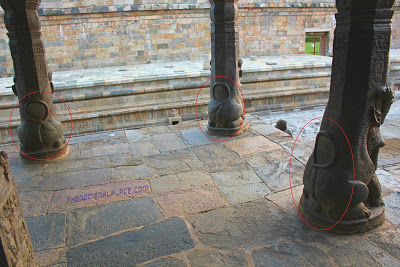 |
| Rest of the pillars have a twisted tail, making a ring |
But I am gonna show you how intelligent the builders were
many centuries ago. Let's say you are inside the sanctum and want to get out.
Focus on the pillars and you will see the sculpture of this animal called yali on all the
pillars. Notice that the tails of all these animals are curved or twisted. All
of them except one, which is straight. Just walk towards this pillar and that's
the way you should get out. This is the ancient way of marking the exit sign.
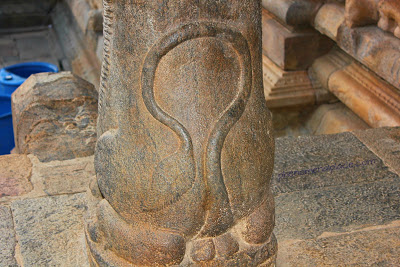 |
| The pillar marking the exit sign, is not twisted and does not make a ring |
Is this just a coincidence? No, because I am gonna show you
the entrance sign as well. When you are outside and want to get in, you can see the front side of the same figure
on all the pillars. Now you can see that the trunks of these figures are slightly
curved and point up.
Even though you see the stairs right here, don't enter through this way because you haven't seen the entrance sign yet. Now, I am walking around and you can see that the trunks are all straight except one. This is the only sculpture with a twisted trunk. This is the way to properly enter this temple's chamber.
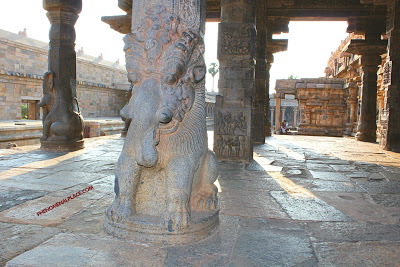 |
| The rest of the pillars have a straight trunk which point up |
Even though you see the stairs right here, don't enter through this way because you haven't seen the entrance sign yet. Now, I am walking around and you can see that the trunks are all straight except one. This is the only sculpture with a twisted trunk. This is the way to properly enter this temple's chamber.
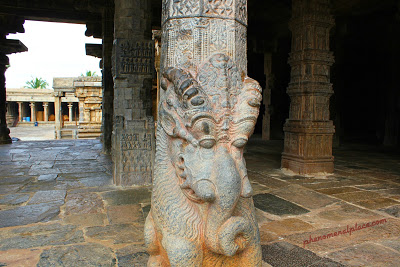 |
| The entrance sign is marked with a twisted trunk that points down |
This is a classic example of how valuable ancient knowledge
has been lost. In fact, I just rediscovered this after many centuries because I
checked with the local priests and archaeologists and they told me they had no
idea about these signs.
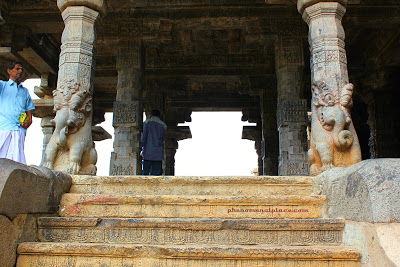 |
| This is the entrance stairway - On the right is the entrance sign |
Just think, the ancient builders who historians describe as
unsophisticated people, have created these signs many centuries ago, this
temple being at least 850 years old. And we, who are supposed to be modern and
sophisticated people are actually not so perceptive and don't pay attention to
these nuances.
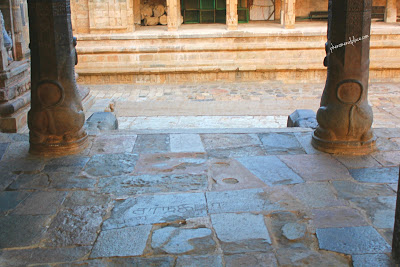 |
| Even though there is a stairway between these pillars on the other side, it is not an exit (It is the entrance) |
If historians are right about ancient people, who could have used these secret signs? These signs prove that there was a better system in place - they had to enter through a certain doorway and exit through another. Today, people random enter and exit through whichever way they can.
Another remarkable feature is that there is no way you can
see the exit sign from the outside because you don't need to see it as long as
you are outside and it only becomes visible once you are inside and want to get
out. And Vice Versa is also true. These sign boards if you will, need no
maintenance and are immortal because they can't be destroyed. They are not just
some external signs that can be removed and replaced, but they have been
incorporated with the infrastructure of the temple. This proves that ancient sculptures were not only created just for art, optical illusions and humor but also to create a system.


2 comments:
Very interesting and educative
Hello sir, would you have more information on the yali sculpture and what creature is it
Post a Comment