





A large boulder sits majestically on the bank of Allegheny River, near Rockland, PA. This abandoned rock bears rock carvings that are a thousand years old and used be a popular tourist attractions. Known as the Indian God Rock, it has about 56 different petroglyphs or rock engravings created between 900 and 1750 C.E. Archaeologists are not sure who created them.
This is the back side of the Rock, but you
can see the entire rock is completely covered with modern day carvings of
names. These were carved mostly by European settlers, and the original Native
American carvings are actually found on the side facing the river.
The latitude and longitude coordinates are roughly 41°19'50.0"N 79°49'42.0"W
It is a very large block of sandstone,
measuring about 22 feet long and 13 feet wide.
This is the best look you can get of this rock’s front and you can see it is
very flat and smooth, making it perfect for carvings.
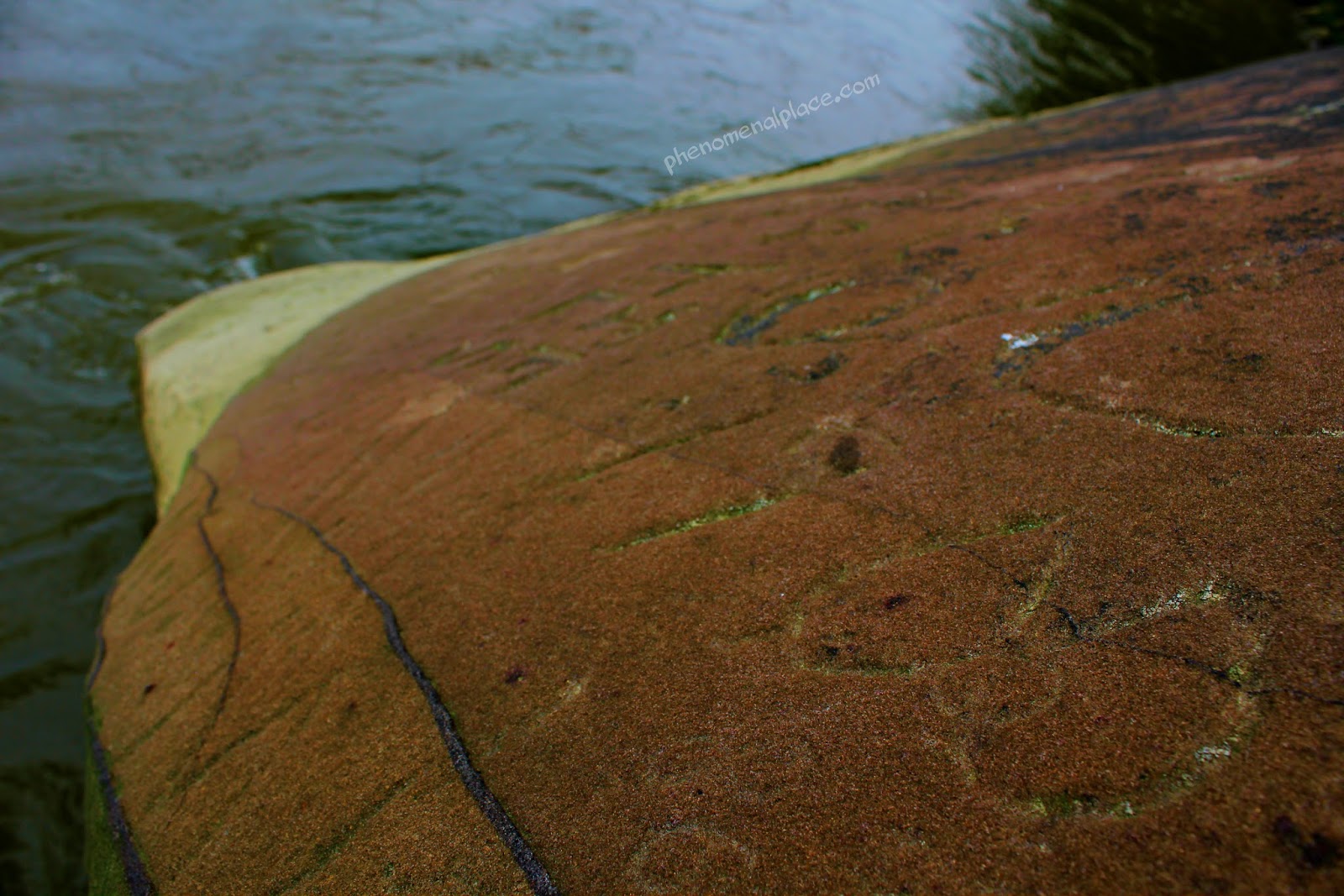 |
| The Front side of the Indian God Rock which bears the ancient petroglyphs |
The rock engravings are
gone because vandals have carved over them, and it is impossible to take a good
look because of the angle and how it is facing the river.
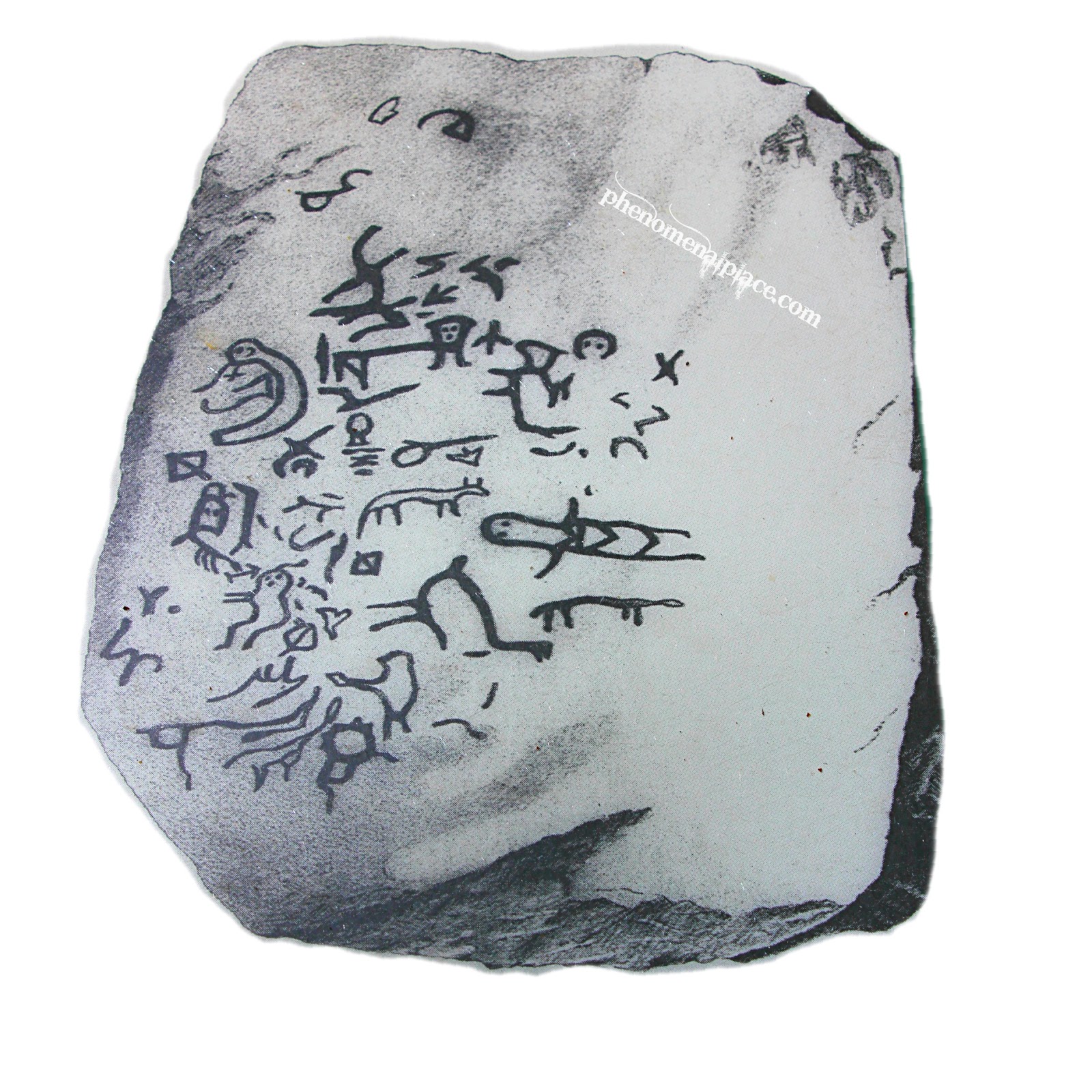 |
| These strange petroglyphs were officially cataloged by Archaeologist James Swauger |
So, we have to depend on the archaeology department’s
documentation. There are about 56 original designs created anywhere between 900 to
1750 C.E. There are many strange figures of humanoids and animals. They also have
some carvings which we simply cannot understand.
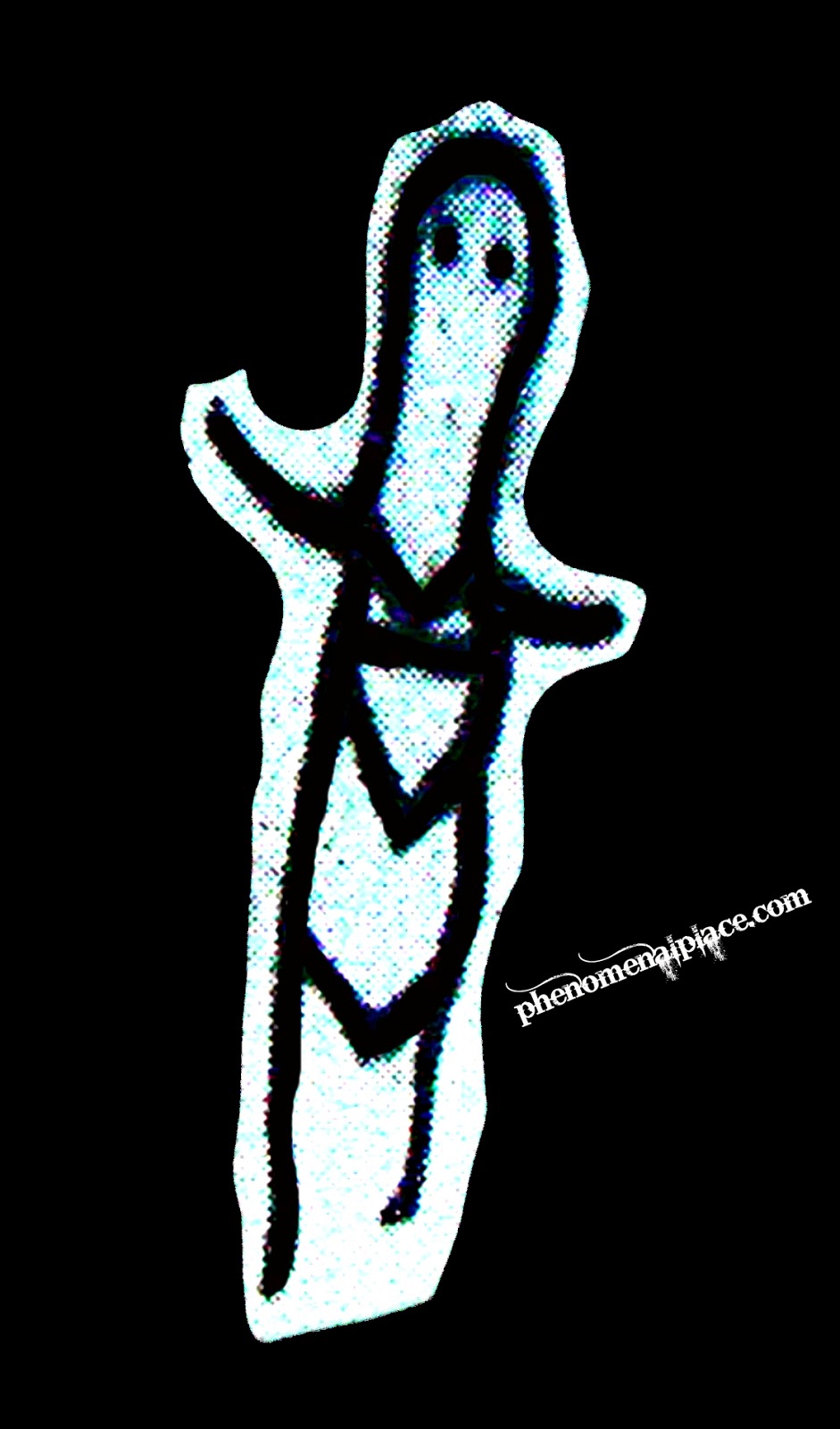 |
| Humanoid or Spirit Otter? What do you think? |
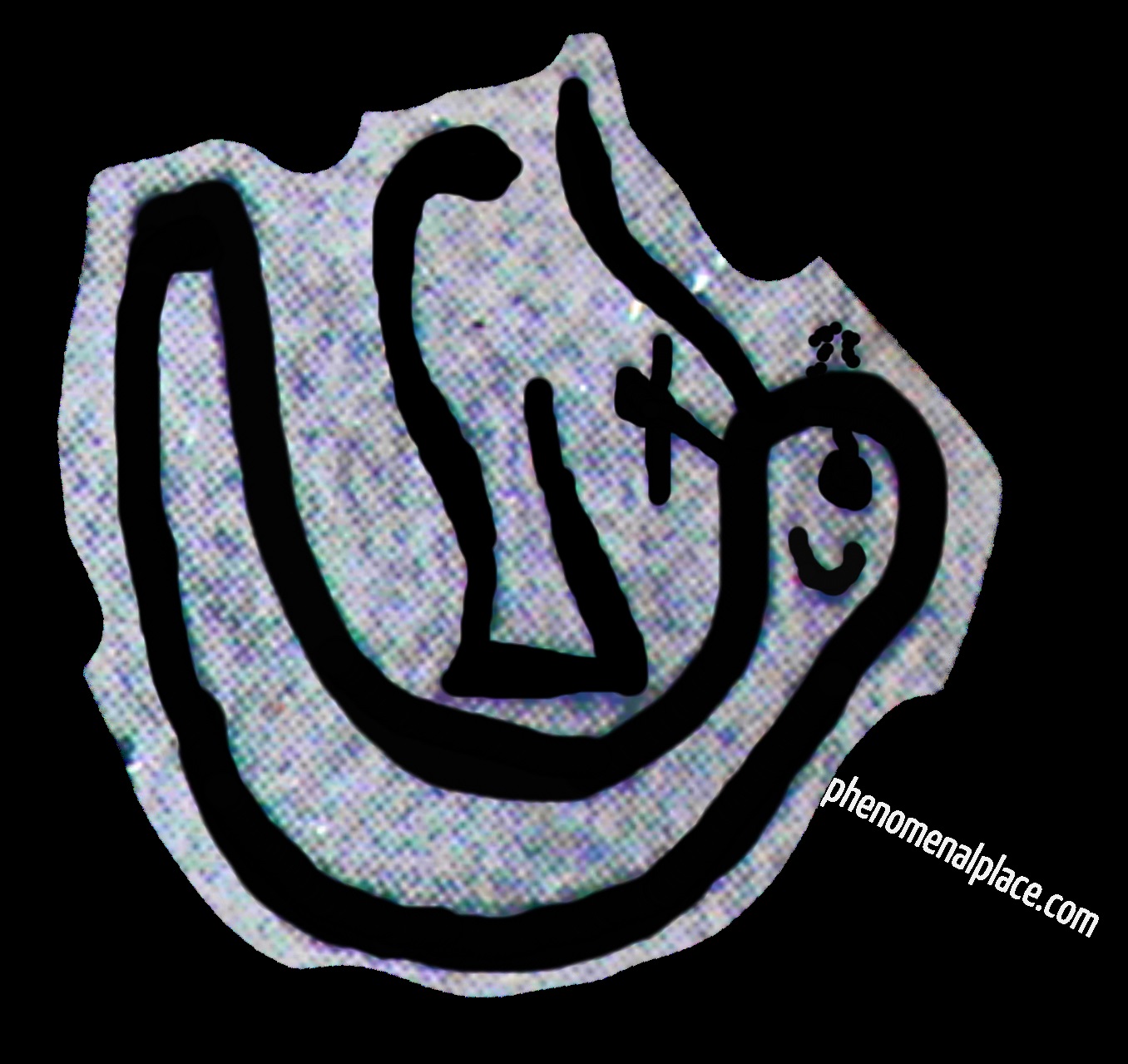
Let me show you some humanoids first. This definitely looks
human but it is called the “Spirit Otter” by James Swauger who spent a lot of
time documenting the Petroglyphs of Ohio valley.
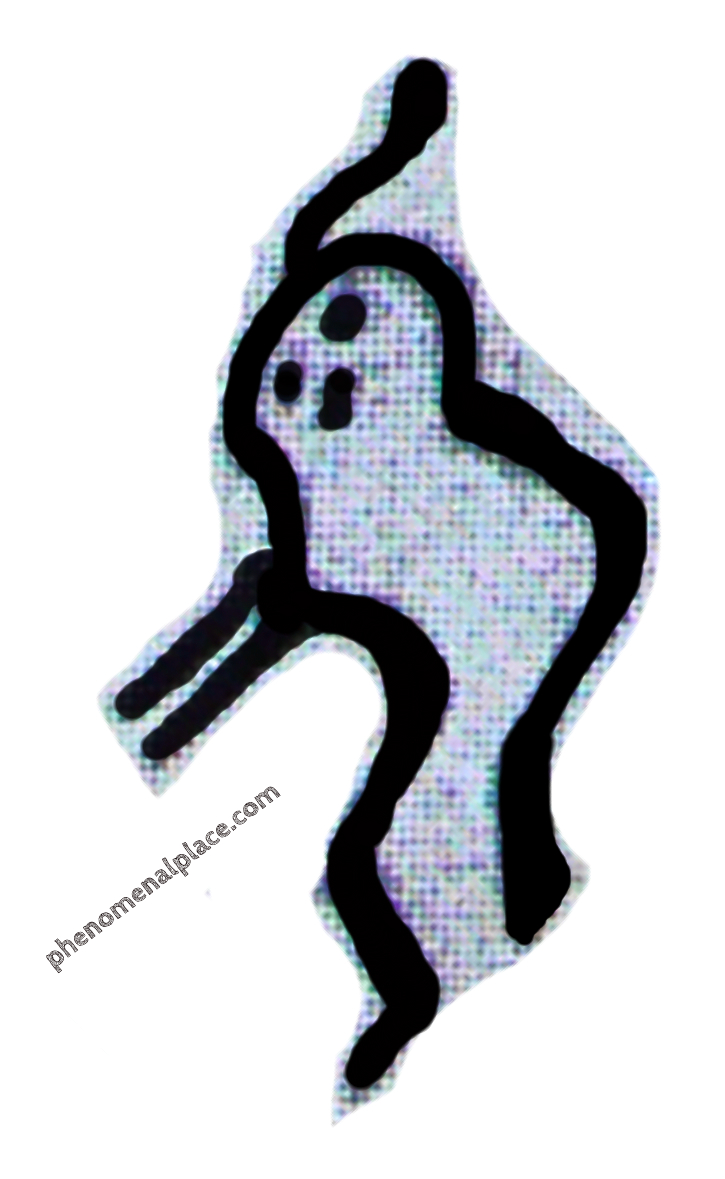
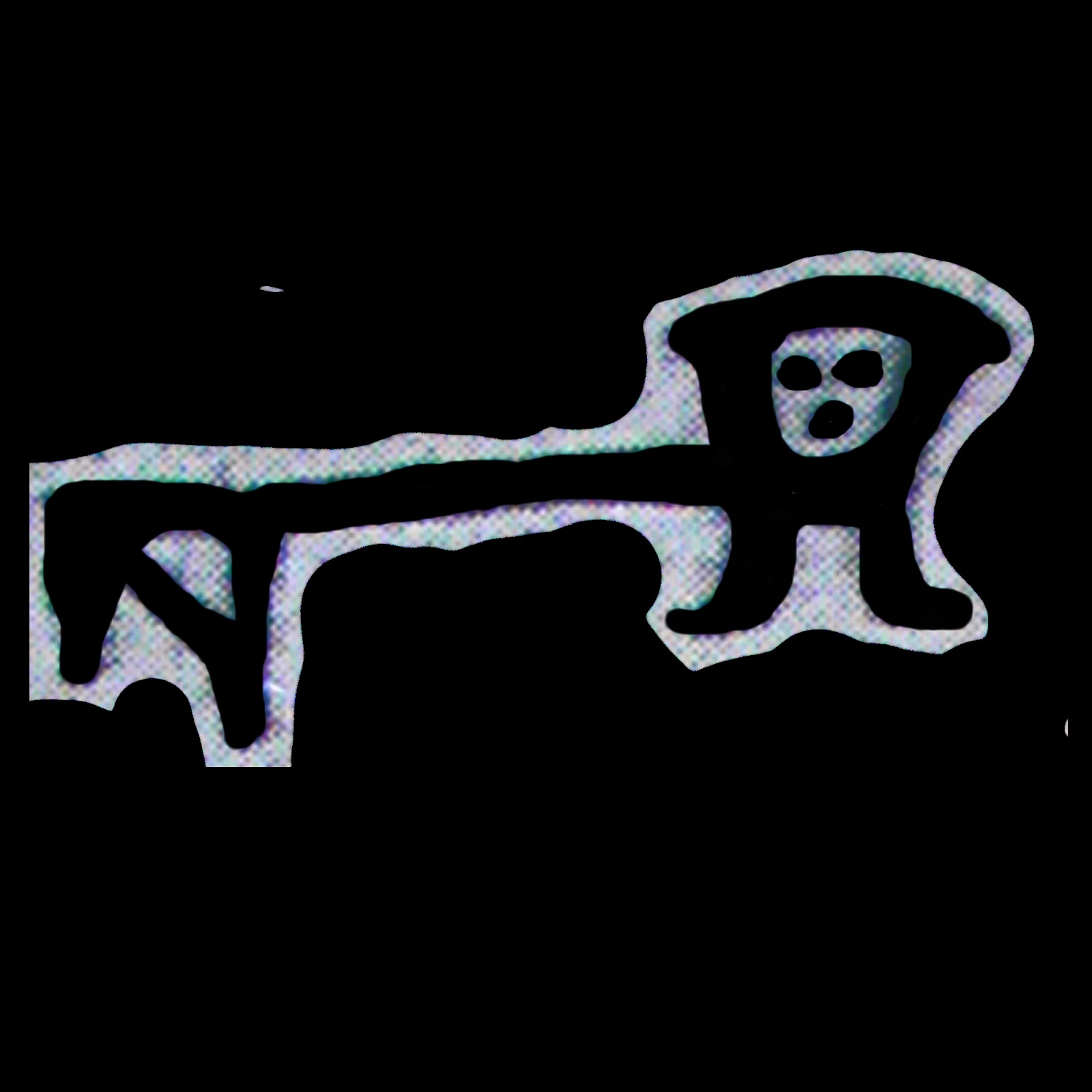
Here is another figure with arms stretched out and has some
kind of an extension sticking out of its head.
This figure looks very strange and neither looks human nor
animal. You can see one eye and the mouth and there are some extensions from
the head, but it doesn’t have any limbs.
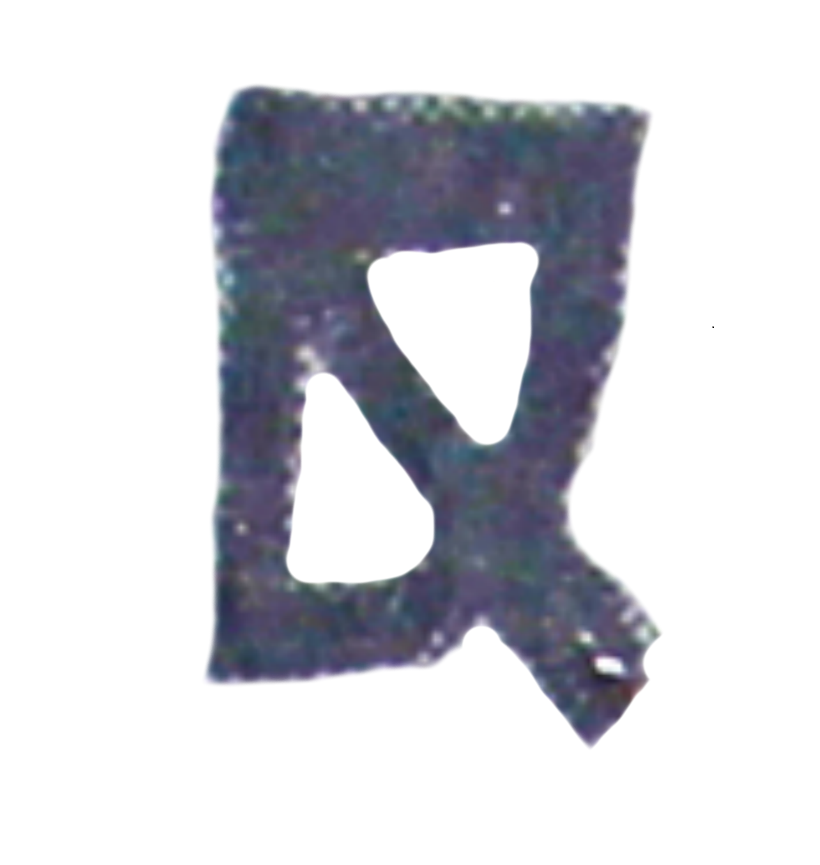
Other than humanoids and animals, they also carved an
object. This is the only non-living thing that is seen on petroglyphs in Ohio
valley: Bow and Arrow. Looks like archery was very important back then for
survival.
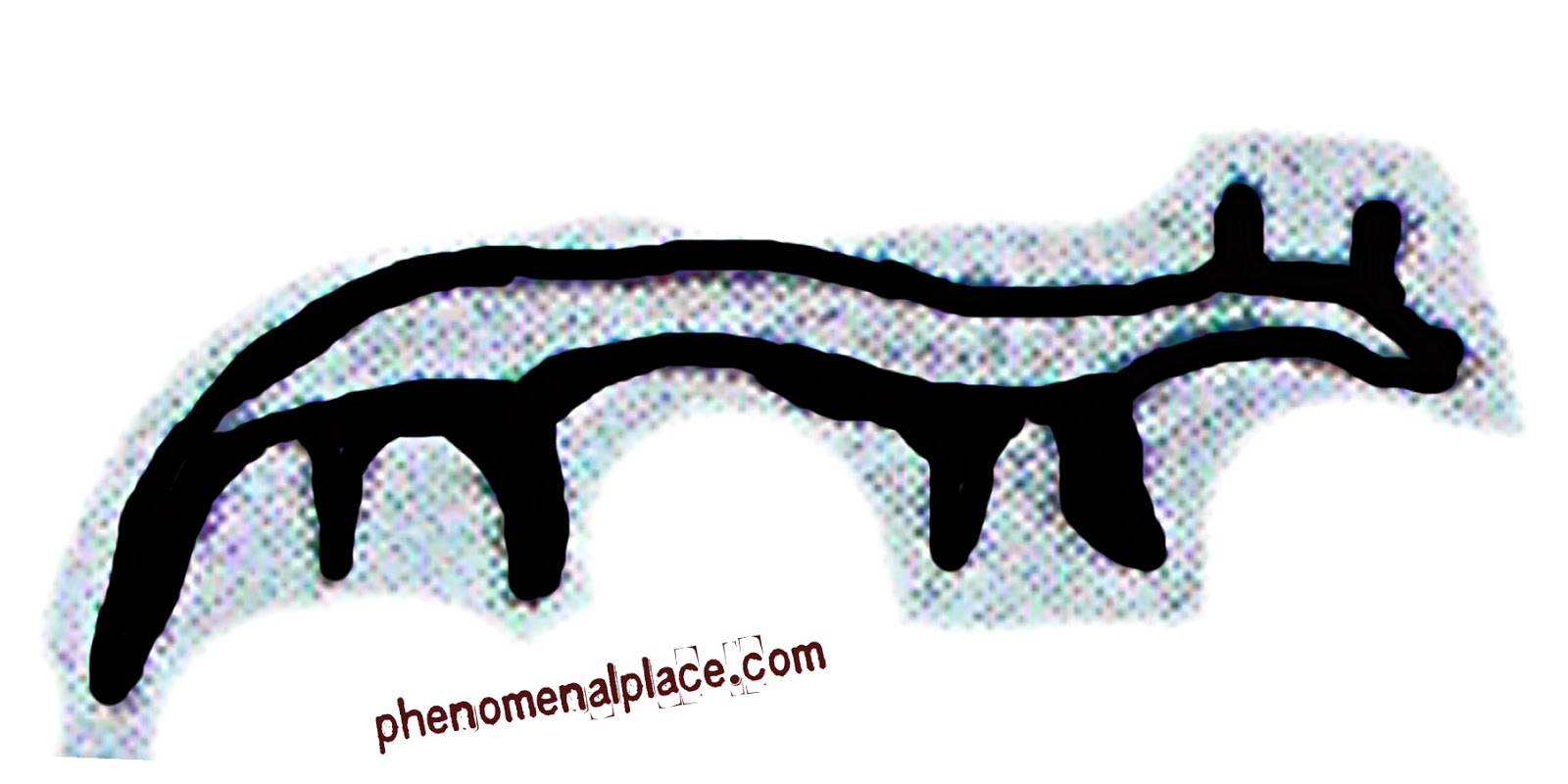
Here are some animals. Archaeologists think the above figure is Mishipeshu, the
mythical underwater panther which a lot of tribes worshiped including the Algonquian,
Monongahela, and the Mound Builder people. However, this theory is inconclusive just like their attribution of Mishipeshu to the Alligator Mound in Ohio.
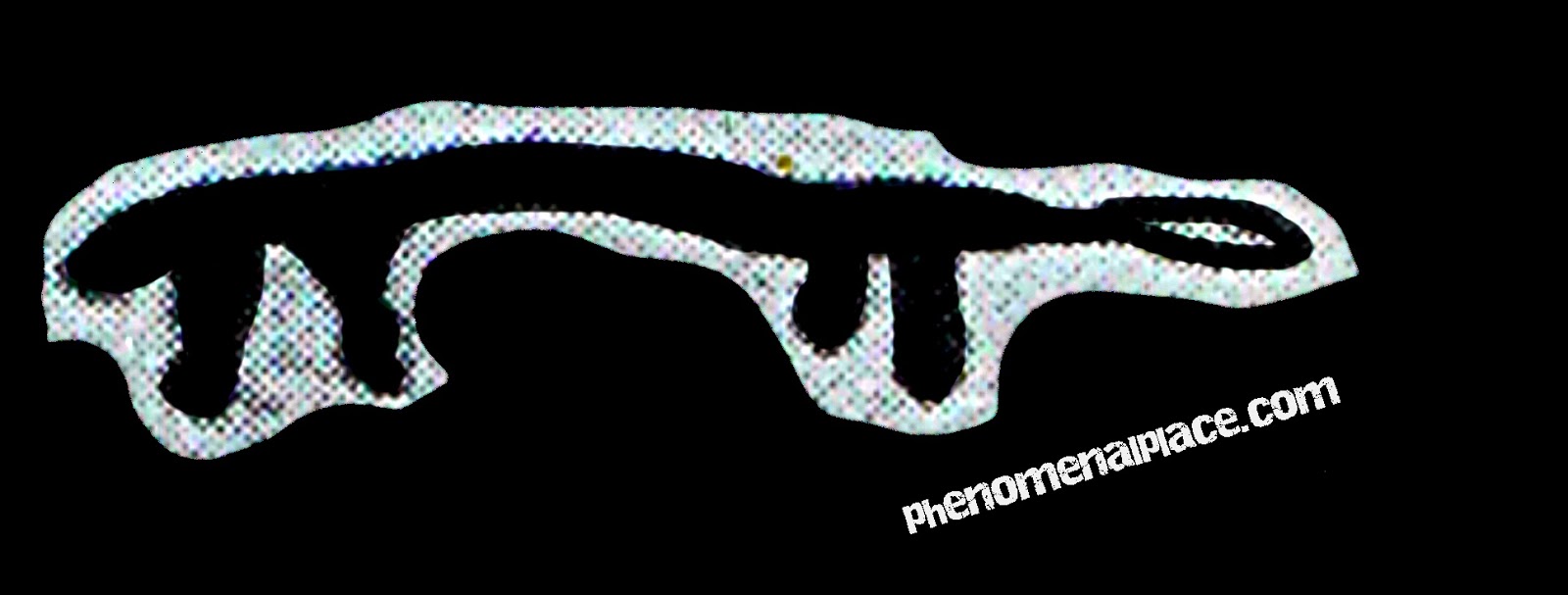
Here are some more animal figures and
may be you can figure out what they are. One weird fact is that there are no
turtles or water birds, which are seen, carved on other ancient sites. This rock also has some other interesting facts
attached to it. In 1749, Captain Celeron de Bienville, a French man from Canada
buried a lead plate underneath this rock to assert French claim to Ohio valley.
He buried several plates in specific locations, but only three of them have
been found so far.
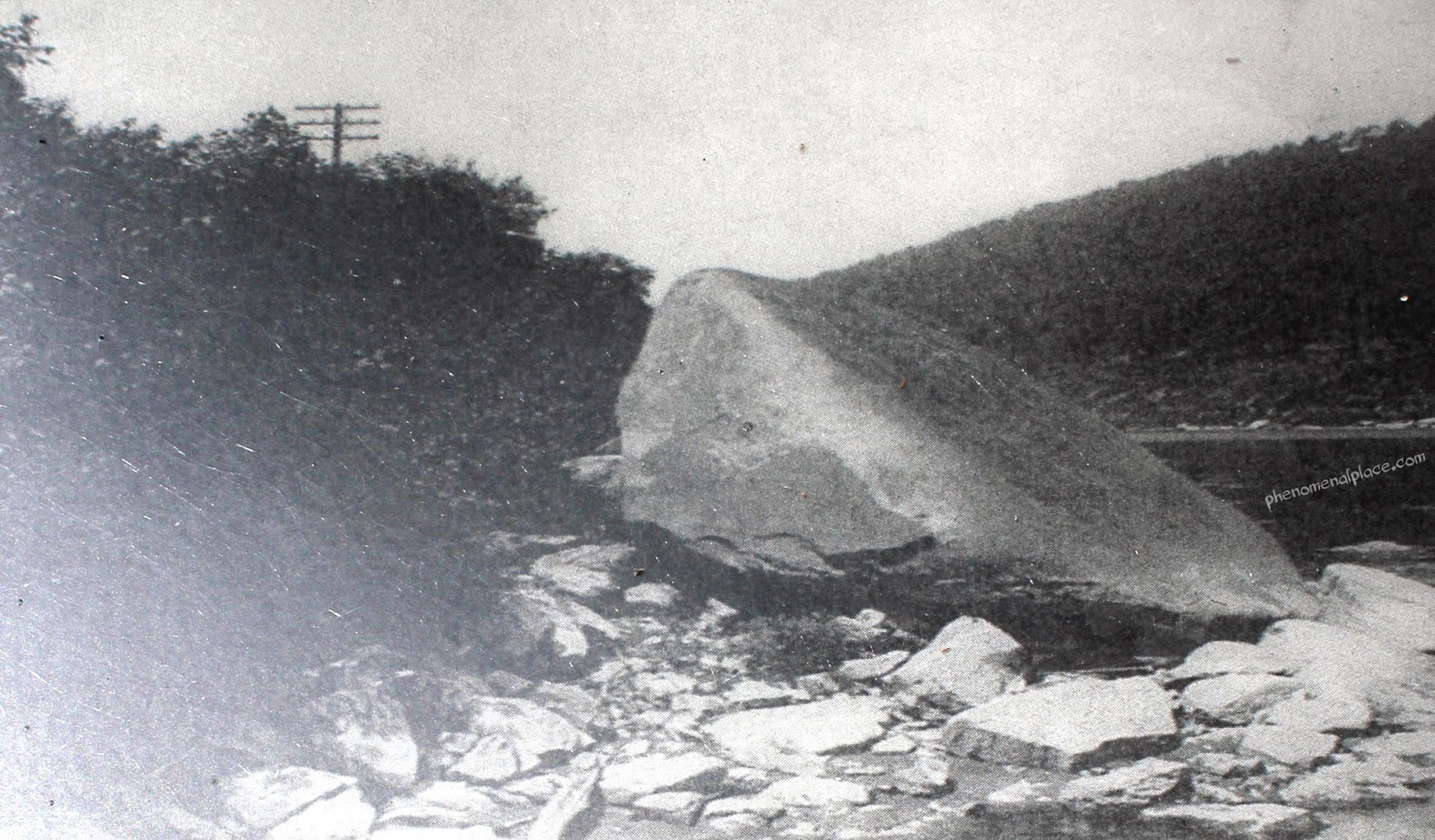
If you look at an old photograph, you can see a lot of rocks
here. But today they are all gone, because people have removed them in search
of this plate which was never found. This
has also made it impossible to have a place to stand and observe the
petroglyphs. Believe it or not it was a
popular tourist attraction at one point where steamships sailing in the
Allegheny River would stop at this rock, so passengers
could observe the rock art.
 |
| Modern day graffiti has entirely destroyed the authenticity of the Indian God Rock |
It is in the middle of nowhere and you have
to walk or bike a few miles to get here and even if you do, you really can’t
see the ancient petroglyphs. I was told even if I take a Kayak and see the
front side, vandals have completely covered it with modern day carvings making
it impossible to see the original rock engravings.
If you would like more information about the Indian God Rock, contact the Venango Museum in Oil City, PA.


1 comments:
yes we believe our ancestor have travelled across globe. check this
Post a Comment