





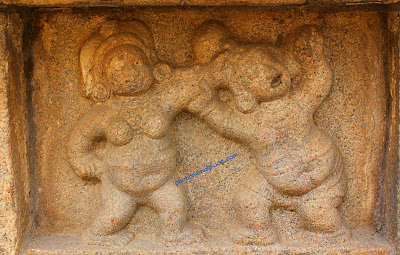
While visiting the Airavatesvara temple in India, I was struck by a curious carving on one of the walls which shows a man beating his wife. He is actually
pulling her hair and you can see the wife taking it quietly. As you can see, this is an isolated sculpture with no
relevant carvings nearby and I've always maintained that even the smallest
sculpture in ancient India usually means something.
I couldn't understand the meaning of this until I was examining the walls on the other side of the temple. Here is the other sculpture which shows the rest of the story. Here the wife is pulling the hair of the husband.
I couldn't understand the meaning of this until I was examining the walls on the other side of the temple. Here is the other sculpture which shows the rest of the story. Here the wife is pulling the hair of the husband.
It is very interesting to put these 2 carvings side by side.
Notice when the man pulls the hair, he is only doing it gently, probably just
to intimidate her and look at the mouth of the wife. She is taking it quietly
because there is no actual pain. But when the wife is doing it, it is clearly
hurting the man, because he is screaming and the open mouth is carved so
skillfully.
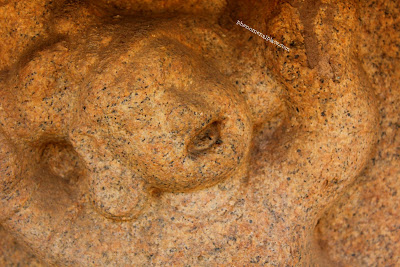
Notice the outstretched arm of the woman and the firm grasp, showing her intention to hurt. The meaning of these 2 sculptures is very interesting. When this man is threatening his wife, it is happening in public because they both have ornaments and headdresses. This man is merely showing off that he is more dominant than his wife in public. However when they go home, as shown in the next carving with no ornaments or headdresses, the wife is the real dominant person of the house.
Notice the outstretched arm of the woman and the firm grasp, showing her intention to hurt. The meaning of these 2 sculptures is very interesting. When this man is threatening his wife, it is happening in public because they both have ornaments and headdresses. This man is merely showing off that he is more dominant than his wife in public. However when they go home, as shown in the next carving with no ornaments or headdresses, the wife is the real dominant person of the house.
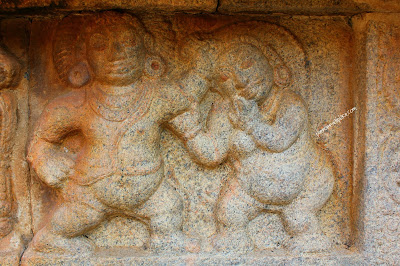
Now, the real question is even though this was carved at
least 850 years ago, have things changed at all in our private lives? What do
you think? Please leave your comment or ask your boss's permission before doing
so :)
P.S: Check out this optical illusion carved in the same temple or the Man/Woman sculpture in the Thanjavur Art Gallery.


0 comments:
Post a Comment