





Hey guys, this is the ancient
site of Hampi that has been abandoned for at least 500 years, and here we can
see this rock that shows solid evidence of machining technology. These perfect circular
marks on this rock can be produced only with machines.
This process is called
facing, and we use the same technology today using lathe machines. It is
covered with dirt when I found it, so I cleaned it up. Now, If you look at
these circles, they are perfectly concentric and there is no deviation, no
chipping in the rock, very similar to modern day technology.
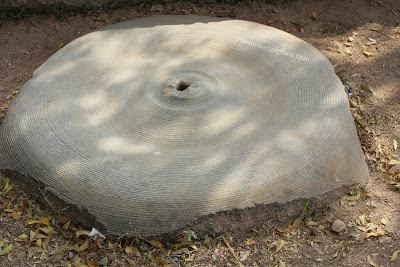 The rectangular slot in the center proves that this rock
was machined using lathe technology. So,
how was this created at least 500 years ago, at a time when historians claim there
was no such technology? Were ancient
builders using high tech machines many centuries ago, just like today? If this
is true, we should not only find finished products like this circular rock,
but we should also find the entire mechanism that was able to create
this finished product. Is it possible that the entire mechanism, the lathe
itself can be found in the same area?
The rectangular slot in the center proves that this rock
was machined using lathe technology. So,
how was this created at least 500 years ago, at a time when historians claim there
was no such technology? Were ancient
builders using high tech machines many centuries ago, just like today? If this
is true, we should not only find finished products like this circular rock,
but we should also find the entire mechanism that was able to create
this finished product. Is it possible that the entire mechanism, the lathe
itself can be found in the same area?
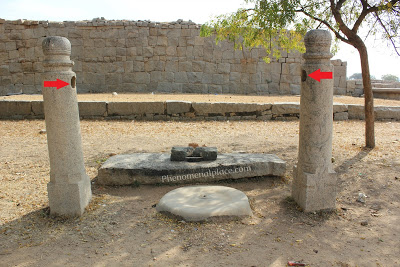
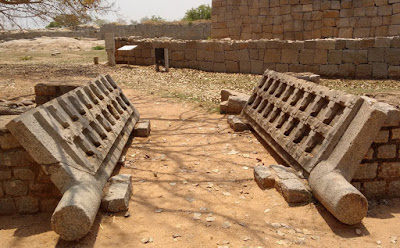
Now, if we take a step back and
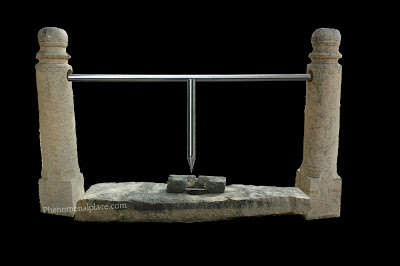
look at the entire picture, it has some very interesting components. It has two
posts with circular holes near the top, which obviously means that a
cylindrical rod was inserted between them, like this.
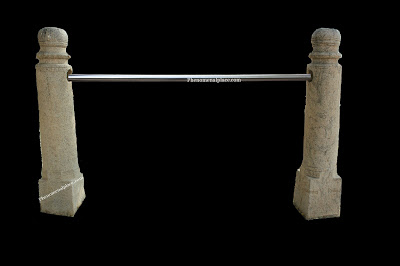
This is a simple model that I am recreating, which I will
show side by side, so you can understand this better. Nearby, we can see a long rectangular slab, with a hole
in the center. When I measured the length of the slab, it matches exactly with
the distance between the two posts. What
does this mean? This means that the slab
would fit perfectly between these posts. I am
using this green rectangular styrofoam block which represents the slab in my
model. So, the set up would look like this.
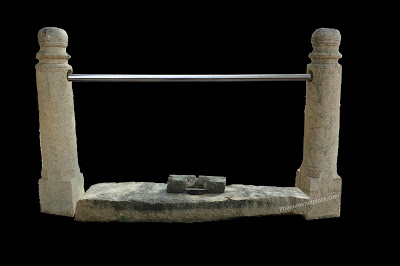
If a metal tool was placed on
this cylinder, pointing downwards, it looks like a modern day vertical lathe
machine. I am going to use a pen for the metal tool in my model. This rectangular slab would be the base plate on which circular
rocks could be placed and machined.
 Here is
a simple round object which represents the circular rock and I place it on the
rectangular slab, and if I rotate the circular rock, and lower the tool from
the top, we can create these identical tool marks.
Here is
a simple round object which represents the circular rock and I place it on the
rectangular slab, and if I rotate the circular rock, and lower the tool from
the top, we can create these identical tool marks.
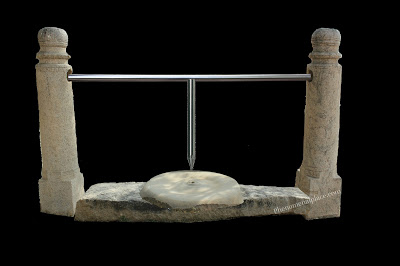 See the similarity of the circles between this model, and
the actual rock. My model has not rotated on a perfect axis, so you see
that the circles are not as good, but the work of ancient builders was perfect.
This set up actually proves that ancient people
used vertical lathe technology, at least 500 years ago. See the video to understand this.
See the similarity of the circles between this model, and
the actual rock. My model has not rotated on a perfect axis, so you see
that the circles are not as good, but the work of ancient builders was perfect.
This set up actually proves that ancient people
used vertical lathe technology, at least 500 years ago. See the video to understand this.
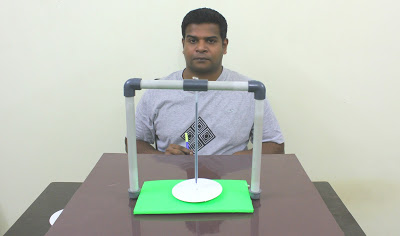
What's even more interesting is
that you can see some circular wear and tear on the base plate as well. Look at the base plate, you can see these half circular
marks caused by the rotating objects which were placed on top of it. The other
half shows no such tool marks, because these marks were created by accident, by
friction from the rotating objects placed above. You can see the same marks
beginning to form on my model as well.

All these evidences clearly prove that machining
technology, specifically vertical lathe technology was used in India, at least
500 years ago, and some archeologists even say this site was built 2300 years
ago. So, I think I have just discovered the
oldest machining set up, known to mankind,
and it is lying in plain sight, abandoned and covered in dirt.
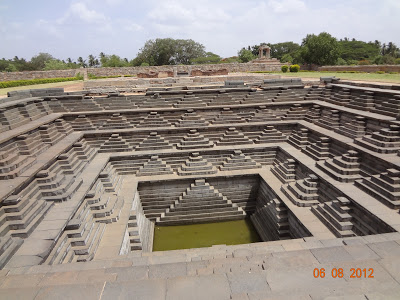
So, why did ancient builders need
this type of advanced technology? What did
they create using this technology? Is it
possible to find the products of this machining in the same site? Here is the majestic well nearby, created with pyramid shaped
steps all around, with machining perfection. Archeologists
say these were created with hard labor, chisels and hammers. But is such a precision possible with simple tools?
Is it possible, that these were made with machining
technology? Were many of the inexplicable
megalithic structures in India, made with machines? Remember, I showed you the machine made pillars at Hoysaleswara temple in a previous post.
But In this abandoned site of
Hampi, we can find a lot more strange
stone artifacts than any other temple. Here we can see two massive doors
created out of solid granite. Again, they
look like they have been created with machines.
 But
there is something much more interesting, these doors were not created for mere
decoration, these stone doors weighing 10 tons each, were used as actual doors in ancient times. There are hinges for swinging the door, and even slots
for locks. Did ancient builders use rocks
for everything, just like how we use metals and wood today? Today most of the things we use like doors and furniture
are made with machines. Modern buildings are
also created with machines, with very little manual labor. Did ancient people build temples and other structures the
same way, but used rocks for everything?
But
there is something much more interesting, these doors were not created for mere
decoration, these stone doors weighing 10 tons each, were used as actual doors in ancient times. There are hinges for swinging the door, and even slots
for locks. Did ancient builders use rocks
for everything, just like how we use metals and wood today? Today most of the things we use like doors and furniture
are made with machines. Modern buildings are
also created with machines, with very little manual labor. Did ancient people build temples and other structures the
same way, but used rocks for everything?
So, what do you think? Did
ancient builders use machines many centuries ago, just like today? If they did not use machines, how do you explain these
circular tool marks, lathe setup and megalithic structures finished with such
precision? Please share this post with your friends, because I
think we have just found the world's oldest lathe technology.


6 comments:
Bro your researches are realy Fantastic..... can put some light on 'YAZHI/YALI' ancient animal carved in all dravidian temples.....
I Would Be Honored, To put your Links & Pictures on My Website: www.GodsMalls.com the Lost a & the Children of the world, need to know this.
Thank you again. Larry Toles
I Would Be Honored, To put your Links & Pictures on My Website: www.GodsMalls.com the Lost a & the Children of the world, need to know this.
Thank you again. Larry Toles
Very good work. Just one detail: the carving pin might have been displaced horizontally on the bar, always keeping a vertical position. This avoids a shear lever.
I think u must must see this link Praveen sir https://youtu.be/R_9Sc5roYkw . This may turn out to be a new topic for you. Notice these analysis are made by a foreigner, I request you to have a look on it.
Your well wisher.
Since most of these temples with cylindrical columns are constructed near rivers , I think the force of rivers or streams was used to drive the lathes
Post a Comment